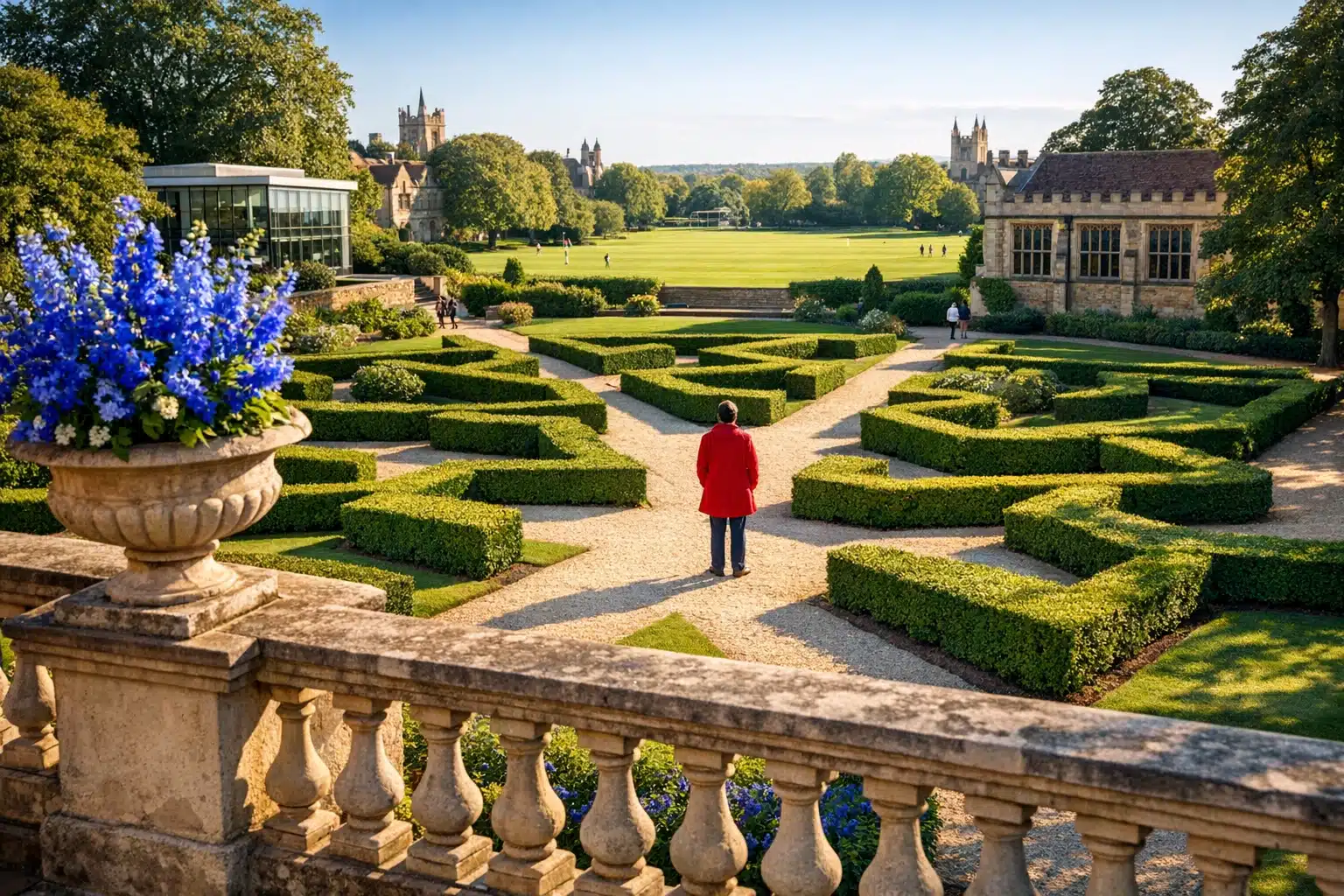
 Artificially generated image
 Top Private Schools to Consider This Year
Choosing a private school can feel less like picking a campus and more like mapping a child’s next decade. Academic results matter, but so do teaching style, student support, culture, cost, and the opportunities that shape confidence beyond the classroom. This guide looks at well-known private schools families often research this year and explains what makes each type compelling. Read on for a practical shortlist builder, not a one-size-fits-all verdict.
Outline and the Criteria Behind a Strong Private School Choice
Before naming schools, it helps to define what “top” actually means. For one family, it means a demanding academic culture with advanced math, research labs, and a direct path to highly selective universities. For another, it means smaller classes, warm mentoring, learning support, and a place where a quiet student slowly finds their voice. That is why this article begins with a simple outline and a clear lens for comparison instead of jumping straight into prestige.
Here is the roadmap for the guide:
• first, the criteria that matter most when evaluating private schools
• next, leading US day schools often found on family shortlists
• then, major boarding schools known for rigorous academics and residential life
• after that, UK and international schools worth attention this year
• finally, a practical framework for building a shortlist that suits a real child, not an imaginary resume
Several factors consistently separate strong private schools from merely famous ones. Class size is one. Many respected independent schools operate with low student to teacher ratios, often somewhere in the single digits, which can translate into more direct feedback and stronger advising. Curriculum is another. Some schools lean into traditional liberal arts models, others emphasize research, design thinking, debate, music, or entrepreneurship. University counseling also matters, especially for families investing substantial tuition. In major cities, private day school tuition can exceed $50,000 per year, while leading boarding schools may cost well above $65,000 once fees, travel, and extras are added. At that price, fit matters even more than branding.
School culture deserves equal weight. A highly competitive campus can energize one student and flatten another. Religious roots, Quaker values, international diversity, athletic expectations, and arts programming all shape the daily mood of a school in ways brochures rarely capture. Think of the school as a small ecosystem: the right one does not simply impress on paper, it allows the student inside it to breathe, stretch, and grow. The sections that follow use that broader definition of quality so families can compare schools with clearer eyes and fewer assumptions.
Top US Day Schools Families Commonly Consider
Among American private day schools, a handful of names appear again and again in parent conversations, consultant recommendations, and admission forums. Schools such as Trinity School, Collegiate School, The Brearley School, Horace Mann School, Sidwell Friends School, and Harvard-Westlake School are often treated as shorthand for excellence. They are not interchangeable, though, and that distinction matters. Trinity and Collegiate, both in New York City, are often associated with traditional academic rigor and deep alumni networks. Brearley is widely admired for strong academics and a serious intellectual culture for girls. Horace Mann blends ambition with breadth, offering a large menu of activities, advanced coursework, and visible strength in both academics and athletics.
Sidwell Friends stands apart for a mission shaped by Quaker values, which often translates into an emphasis on reflection, service, and civil discourse alongside strong college outcomes. Harvard-Westlake, based in Los Angeles, is frequently praised for combining demanding coursework with robust arts, athletics, and student leadership opportunities. What links these schools is not a single teaching style but a pattern: selective admissions, experienced faculty, abundant extracurriculars, and students who are typically expected to manage a meaningful workload.
Families often compare these schools using a few practical questions:
• Does the school favor a traditional classroom model or seminar-style discussion?
• Is the atmosphere collaborative, visibly competitive, or a blend of both?
• How much room is there for the arts, athletics, and student-led projects?
• What kind of social-emotional support exists beneath the high expectations?
Urban day schools have special advantages. Students often gain access to museums, theaters, research institutions, internships, and city-based partnerships that can enrich classroom learning. That can be a powerful draw for self-directed teenagers who like stimulation and variety. Still, city campuses may offer less green space and a faster pace than suburban schools. For some students, that energy feels electric; for others, it feels like standing in a busy train station while trying to solve calculus. The strongest choice usually comes down to a personal match between student temperament and school environment. A school can be extraordinary and still be wrong for your child, which is why these names should start a conversation, not end it.
Prestigious Boarding Schools With Academic Depth and Residential Life
Boarding schools occupy a different category because they educate students not only during the school day but across evenings, weekends, traditions, and shared routines. Schools such as Phillips Academy Andover, Phillips Exeter Academy, Choate Rosemary Hall, Deerfield Academy, St. Paul’s School, Groton School, and Cate School are widely recognized for combining rigorous academics with immersive campus life. If day schools are like strong orchestras, boarding schools are closer to whole conservatories: the learning does not stop when the bell rings.
Phillips Exeter is famous for the Harkness method, a discussion-based approach in which students often sit around an oval table and learn by questioning, listening, and building arguments together. That model can be transformative for students who thrive on conversation and intellectual give-and-take. Phillips Academy Andover, by contrast, is often noted for its scale, course variety, and broad extracurricular ecosystem. Students can benefit from the sheer number of classes, clubs, publications, and athletic options available. Choate Rosemary Hall frequently attracts families looking for a balance of academic seriousness, visual appeal, and a well-developed residential program. Deerfield is often praised for close-knit community and tradition, while Groton and St. Paul’s are associated with strong advising cultures and deeply rooted institutional identity. Cate, located in California, offers a smaller boarding environment with striking natural surroundings and a distinctive West Coast feel.
Boarding schools can offer major advantages:
• built-in independence and time management
• easier access to faculty outside class
• weekend programming, leadership roles, and a stronger sense of community
• a diverse student body drawn from many states and countries
Still, boarding is not automatically better. It asks more from a student emotionally and socially. Homesickness, pressure, and the intensity of communal living are real factors, especially in the first year. Costs are also substantial, often above $65,000 annually before travel and extras, although many top schools provide financial aid. For the right student, boarding school can be a launchpad. It teaches self-reliance in a structured setting and can make a teenager feel, perhaps for the first time, that learning is not a task assigned by adults but a world they can enter on their own terms.
UK and International Private Schools Worth Close Attention
For families considering education beyond the US system, the field broadens quickly. In the UK, schools such as Eton College, Westminster School, St Paul’s School, Winchester College, and Cheltenham Ladies’ College remain high-profile names for good reason. They are known for academic ambition, long institutional histories, and strong university preparation. Yet each brings a different tone. Westminster is often associated with formidable academic intensity and central London access. Eton blends heritage, scale, and a broad co-curricular tradition. St Paul’s is widely respected for academic results and intellectual pace, while Winchester is admired for scholarship and a distinct sense of tradition. Cheltenham Ladies’ College often appeals to families seeking a highly regarded all-girls environment with strong academic and extracurricular support.
Internationally, other schools enter the picture for globally mobile families or those seeking a more international curriculum. Aiglon College in Switzerland is frequently considered for its mountain setting, character education, and international student mix. Institut Le Rosey is famous for luxury and global profile, though its cost places it in a category few families can realistically pursue. UWC South East Asia is often valued for mission-driven education and the International Baccalaureate, while Tanglin Trust School in Singapore is a recurring choice for expatriate families wanting British-style education in Asia. These schools differ dramatically in atmosphere, cost, and admissions profile, but they share one powerful feature: they prepare students to move across cultures with more confidence.
When comparing UK and international options, families should look closely at curriculum:
• GCSE and A-level pathways can suit students who prefer subject specialization
• the IB can appeal to students who want breadth, writing, and interdisciplinary thinking
• US-style international schools may offer familiarity for relocating families
• language exposure and global mobility can be major advantages, especially for students considering universities in multiple countries
The romance of a famous international school can be strong. Stone buildings, old libraries, alpine campuses, and polished prospectuses have a way of whispering grand futures. But the practical questions remain grounded: Where will the student be happiest? Which curriculum matches their strengths? How well does the school support transitions, pastoral care, and life after graduation? The best international choice is rarely the one with the most glitter. It is the one that gives a student both roots and range.
How to Build a Smart Shortlist This Year
If you are a parent, student, or guardian trying to move from admiration to action, the final step is building a shortlist with discipline. Start with three filters: fit, affordability, and admissions realism. A school may be magnificent, but if the environment is too intense, the commute is unreasonable, or the tuition stretches the family to a breaking point, it belongs in the “interesting” pile rather than the “apply” pile. Independent school financial aid can be meaningful, but policies vary widely, and families should read them carefully. Ask not only about tuition but also about books, meals, uniforms, transportation, travel, technology fees, and activity costs.
Then evaluate the student’s actual profile. Grades, testing where required, teacher recommendations, interviews, writing samples, and extracurricular depth all shape admissions outcomes. Selective private schools routinely turn away strong applicants because demand is so high. That is why a balanced list matters. A sensible private school list often includes:
• a few highly selective schools the student genuinely loves
• several strong-match schools where the academic and social fit is clear
• at least one option that is more attainable and still attractive
Visits and conversations are often the turning point. During tours, look past polished talking points. Notice whether students greet adults naturally, whether work displayed on walls seems thoughtful, and whether faculty speak about children as individuals rather than as achievements in uniform. Ask direct questions about counseling, workload, support during difficult terms, and how the school handles stress. If possible, let the student do part of the talking. Their reaction on the ride home may be more revealing than any ranking.
In the end, the target audience for this search is not the internet, a neighbor, or a family group chat. It is the student who will walk those halls every day. The right private school should challenge them, yes, but it should also leave room for curiosity, friendship, resilience, and rest. A smart choice this year is not the school with the loudest reputation. It is the one where the student can do excellent work, become more fully themselves, and step into the future with momentum rather than strain.